Can Dental Bonding Correct Slightly Crooked Teeth?
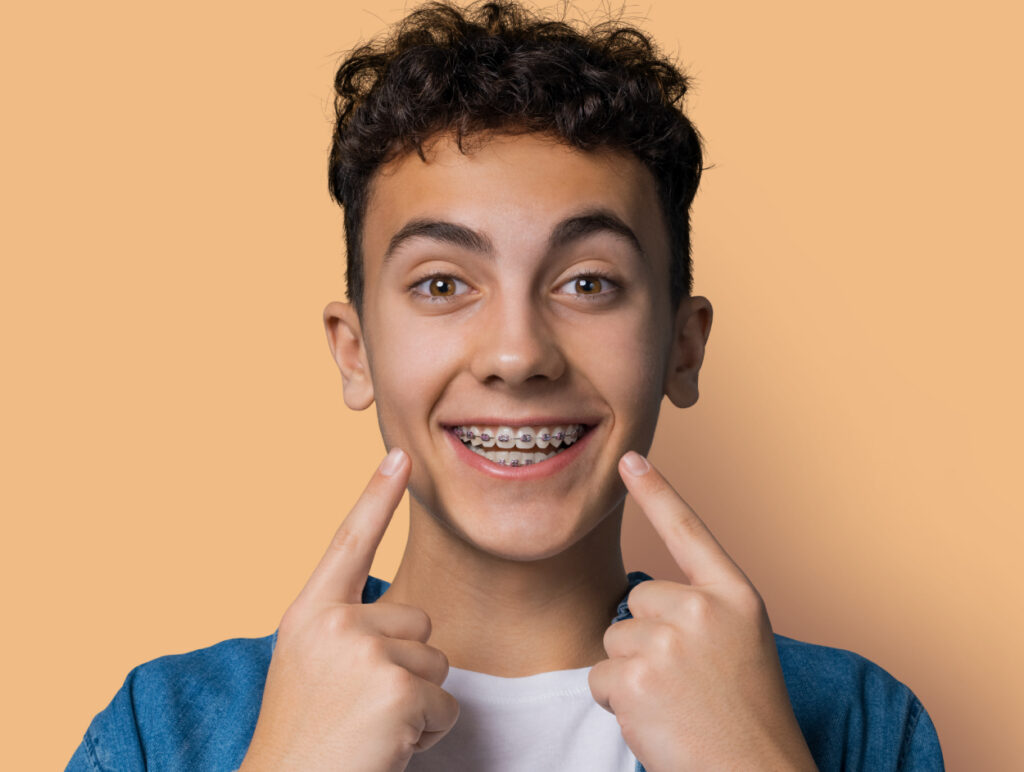
If a tooth is only a little out of line, many people ask the same question in the chair: can you fix this without braces or aligners?
Sometimes, yes. Dental Bonding can make slightly crooked teeth look straighter, often in a single visit, and without moving the teeth at all. That distinction matters. Bonding is a cosmetic reshaping treatment. It changes what the eye sees. It does not change where the root sits in the bone or how the teeth bite together.
That is why the real answer is not a simple yes or no. It depends on how crooked the teeth are, where the tooth sits, how your bite functions, how much enamel is available, and how realistic your expectations are. In the right case, bonding can be a smart, conservative solution. In the wrong case, it can make the tooth bulky, fragile, or harder to clean.
What dental bonding actually does
Dental Bonding uses a tooth-colored composite resin, similar to the material used in many white fillings. The surface of the tooth is lightly prepared, conditioned, and then the dentist places and sculpts the resin by hand. Once the https://andresxlvc571.hexaforgey.com/posts/dental-bonding-for-smile-enhancement-on-a-budget shape looks right, a curing light hardens the material, and the final result is polished so it blends with the natural enamel.
For a slightly crooked front tooth, bonding can visually straighten the smile by changing contours, closing tiny gaps, softening edges, or building out an area that looks tucked in. The eye reads symmetry faster than it reads true tooth position. A tooth can still be mildly rotated or slightly behind its neighbor, but if the visible surfaces align well, the smile often appears straighter.
This is one reason bonding can be so effective in photographs and conversation. Most people do not study a smile from every angle. They notice whether the teeth look even, proportional, and harmonious with the lips and face.
The difference between looking straight and being straight
This is where many treatment conversations go off track. Cosmetic correction and orthodontic correction are not the same.
If one upper lateral incisor sits just a bit behind the central incisor, bonding may add volume to the front edge so it no longer looks recessed. If a canine has a mild rotation, reshaping neighboring teeth or softening that canine's visible line angle may reduce how obvious the twist appears. If two teeth overlap very slightly, contouring and composite can create a cleaner front view.
But the tooth itself has not moved. The contact points, root position, and bite relationship stay essentially the same. That means bonding works best when the misalignment is mild and mostly a visual issue, not a functional one.
Patients are often surprised by how small a discrepancy needs to be before bonding stops being the best option. A millimeter or two can be manageable. Once the dentist has to add a lot of width or thickness to disguise crowding, the result may start to look unnatural. The tooth can appear too square, too broad, or too prominent when viewed from the side.
When bonding can work very well
The strongest candidates for bonding tend to have minor irregularities in otherwise healthy, stable teeth. Think of the person whose smile is almost there, but one or two teeth interrupt the balance.
Bonding often performs well in cases like these:
- A tooth is slightly rotated, but not significantly twisted.
- One front tooth sits a little behind or ahead of the others.
- There is mild uneven spacing that exaggerates the appearance of crookedness.
- Small chips or worn edges make alignment look worse than it is.
- Tooth shape is the main problem, not actual crowding.
I have seen many cases where a patient believed they had "crooked teeth," but what they really had was a shape issue. A narrow lateral incisor beside a fuller neighboring tooth can make alignment look off even when the teeth are fairly well positioned. Building that narrow tooth to the right proportion can transform the smile more effectively than people expect.
This is especially true after years of minor wear. Front teeth do not always age evenly. Tiny edge changes can create visual imbalances that read as crookedness. In those situations, bonding can both restore and improve.
When bonding is usually the wrong tool
There is a point where trying to mask misalignment with composite becomes an exercise in compromise. If the crowding is moderate to severe, if teeth overlap in a way that traps plaque, or if the bite is unstable, bonding may create a prettier surface picture while leaving the deeper problem untouched.
A few red flags come up repeatedly in treatment planning. A lower front tooth that is heavily rotated, an upper tooth that bites edge to edge, or a crowded smile where every tooth is competing for space are not ideal bonding cases. The more the dentist has to "fake" alignment by adding material, the more likely the result will feel bulky or chip under normal function.
There is also the cleaning issue. If a crooked tooth already creates a difficult area to floss, adding resin in the wrong place can make that harder. Cosmetic dentistry should not make oral hygiene more difficult.
Some patients are also strong grinders. In a patient with bruxism, especially one who wears through enamel or chips incisal edges, front tooth bonding can still be done, but it requires caution. Night guard use becomes part of the conversation, and even then, durability is more uncertain than in a low-force bite.
Why dentists often compare bonding with orthodontics
The choice is rarely about whether bonding works at all. It is more often about whether bonding is the best long-term answer compared with moving the teeth.
Orthodontic treatment, including clear aligners, corrects position. Bonding changes appearance. Those are different goals, and sometimes they complement each other rather than compete.
A common real-world example is the adult patient with mild crowding who wants the least invasive finish possible. Aligners can move the teeth into a more favorable position over several months, and then a tiny amount of bonding can refine edges or adjust symmetry. That combined approach often gives a more natural result than trying to do everything with resin.
On the other hand, not everyone wants months of treatment for a small cosmetic issue. If the bite is stable and the concern is limited to one subtle irregularity in the smile zone, bonding can be a very reasonable shortcut. It is less expensive than veneers in many practices, usually faster than orthodontics, and generally conservative of tooth structure.
The trade-off between speed and precision
People love the idea of same-day improvement, and bonding can absolutely deliver that. A front tooth can often be reshaped in one appointment. That is a major advantage for someone preparing for a wedding, job change, reunion, or just tired of seeing the same flaw in every photo.
Speed, however, comes with limits. Orthodontics gives the dentist and patient more control over true tooth position, gum symmetry, and bite dynamics. Bonding is more like optical architecture. It uses light, contour, proportion, and surface texture to redirect attention.
That art matters. A skilled dentist does not simply make a tooth bigger until it looks less crooked. They work with line angles, embrasures, translucency, and how the tooth reflects light. Tiny adjustments can create a straighter appearance without overbuilding the tooth. This is why two bonding cases with the same starting point can look very different depending on who performs them.
How much crookedness is “slight”?
This is the part patients understandably want quantified, but the answer is visual as much as numerical. Slight crookedness usually means a discrepancy mild enough to disguise without excessive resin thickness or poor contour. If the tooth can be improved while still respecting natural proportions, bonding is in the conversation.
In practice, dentists often look at several things at once. They assess how the tooth appears from the front, whether it projects too far from the arch when viewed from the side, how the neighboring teeth relate to it, and whether changing shape would interfere with the bite. A small rotation in a lateral incisor may be easier to mask than the same rotation in a central incisor, simply because central incisors dominate the smile and show more.
The patient's lip line also matters. Someone who shows a lot of tooth and gum when smiling may need more precise harmony than someone whose smile reveals only the incisal edges. Under bright operatory lights, many imperfections look dramatic. In everyday life, not all of them justify treatment.
The appointment itself
For simple cosmetic bonding on a slightly crooked tooth, the process is usually straightforward. The tooth may need little to no drilling. Often the dentist lightly roughens the enamel, applies a bonding agent, layers composite in shades that match the natural tooth, shapes it, cures it, and polishes it smooth.
If no local anesthesia is needed, the appointment can feel surprisingly easy. Many patients expect something more involved than what actually happens. The artistry usually takes longer than the preparation.
Color selection is important. Teeth are not one uniform shade, especially near the edge, where translucency changes the way light passes through. Good bonding should not just match the color, it should match the character of the tooth. That includes gloss, surface texture, and edge shape. A technically straight-looking tooth that is too flat or too opaque can stand out for the wrong reasons.
What bonding can and cannot hide
Dental Bonding is particularly good at disguising asymmetry, minor overlap, triangular spaces near the gums, and contour defects that draw attention to slight misalignment. It can also soften the appearance of a tooth that angles inward by building the area that disappears in shadow.
It is less effective when the tooth is too far forward, too far back, or significantly twisted. In those cases, the amount of material needed can alter speech feel, create cleaning challenges, or produce a tooth that simply looks too thick. Composite is versatile, but it still has to obey anatomy.
One difficult category is the patient whose front teeth are mildly crooked and also quite small. At first, that sounds like a perfect bonding case because there is room to add shape. Sometimes it is. Sometimes, though, increasing the visible size enough to fake alignment creates a smile that looks heavy. The best cosmetic work is often restrained. A slightly imperfect but natural smile usually ages better than one that looks overbuilt.
Longevity, maintenance, and the reality of wear
Bonding is not permanent. It can last for years, but it is more maintenance-sensitive than natural enamel and generally less durable than porcelain veneers. Lifespan varies with bite force, diet, oral habits, and where the bonding sits on the tooth.
Front edge bonding on a careful patient may do well for several years. In a coffee drinker who bites pens, chews ice, and clenches at night, staining and chipping may appear much sooner. Composite can pick up discoloration over time, especially at the margins. It also loses polish gradually, which may matter if the bonded tooth is in a very visible area.
That said, repair is one of bonding's best strengths. Small chips can often be patched. Adjustments are usually simpler and more affordable than replacing a porcelain restoration. For many patients, that flexibility is a worthwhile trade.
Cost matters, but so does value
Bonding is often chosen because it is less expensive than veneers and faster than orthodontics. That is understandable, but cost alone should not drive the decision.
A well-done bonding case that suits the tooth can be excellent value. A poorly chosen case can turn into repeated repairs, frustration, and eventually a shift to aligners or veneers anyway. The least expensive first step is not always the least expensive path over five years.
It is also worth remembering that "minimal treatment" is not always the most conservative treatment if it locks in a poor bite relationship or encourages overbuilding. True conservatism means preserving tooth structure, function, and long-term options.
Bonding versus veneers for slightly crooked teeth
Patients often compare these two because both can change shape and visual alignment. Veneers usually offer greater control over color, polish retention, and long-term stain resistance. They can also mask certain alignment issues more dramatically.
But veneers generally involve more commitment. Depending on the case, some enamel may need to be reshaped, and once you start down that path, maintenance becomes part of life. For a single mildly crooked tooth in an otherwise healthy smile, veneers can be more treatment than necessary.
Bonding, by contrast, is often the lighter-touch option. If the goal is a subtle correction rather than a full smile redesign, it frequently makes more sense to consider bonding first.
The importance of bite evaluation
This part is easy to overlook because the patient sees the front of the teeth, while the dentist worries about how they meet. A tooth that looks easy to bond may sit in the path of a strong opposing tooth every time the patient bites or slides side to side. That can shorten the life of the restoration quickly.
When I have seen bonding fail early, the culprit is often not the material itself but the occlusion. Even beautiful cosmetic work will struggle if it lives in a high-stress contact zone. A proper evaluation should include not only how the tooth looks at rest, but how it functions when chewing and moving through normal jaw motions.
Questions worth asking before you commit
If you are considering Dental Bonding to make slightly crooked teeth look straighter, ask practical questions, not just cosmetic ones.
- Am I a good candidate for bonding, or would aligners solve this more cleanly?
- Will the bonded tooth look wider or thicker than normal?
- How will this affect flossing, bite contacts, and long-term maintenance?
- How long do you expect this result to last in my case?
- If it chips or stains, can it be repaired easily?
Those answers reveal a lot about how carefully the case has been thought through. A strong treatment plan balances esthetics, function, and realism.
What good outcomes usually have in common
The best bonding cases for slightly crooked teeth share a few patterns. The dentist respects natural tooth proportions. The patient has a stable bite or is willing to wear a night guard if needed. Expectations are focused on improvement, not impossible perfection. And the amount of correction needed is modest.
A patient with one mildly tucked-in lateral incisor, healthy enamel, and no heavy grinding habit may leave thrilled after a single visit. A patient with crowding across the whole front arch, active clenching, and a hope that bonding will replace orthodontics entirely may be disappointed, even if the work is technically excellent.
That is not a failure of the material. It is a mismatch between the treatment and the problem.
So, can dental bonding correct slightly crooked teeth?
Yes, when the crookedness is truly slight and the goal is cosmetic improvement rather than physical tooth movement. Dental Bonding can make a smile look straighter by refining shape, width, edge position, and symmetry, often with minimal removal of tooth structure and in far less time than orthodontic treatment.
The key is restraint and case selection. Bonding works best when it enhances what is already close to ideal. It works poorly when asked to hide more misalignment than it reasonably can.
If you are bothered by one or two slightly crooked teeth, a cosmetic consultation is worthwhile. Just go in knowing what bonding does well: it creates the appearance of better alignment. In the right hands, and in the right case, that can be exactly enough.
Toothworks of Bakersfield, Dentist and Orthodontist
Address: 1030 H St #1, Bakersfield, CA 93304
Phone number: +16613239421
FAQ About Dental Bonding
How long does dental bonding last?
Dental bonding typically lasts between 3 and 10 years (averaging about 5 to 8 years) before it needs a touch-up or replacement. Its lifespan depends heavily on your daily habits, where the bonding is placed in your mouth, and how well you care for your teeth.
How expensive is bonding a tooth?
Dental bonding typically costs between $100 and $600 per tooth, with a national average of about $431 per tooth.
What are the downsides of dental bonding?
Dental bonding has several drawbacks, including lower durability, a shorter lifespan, and a tendency to stain compared to alternatives like porcelain veneers.